Home / Porcelain veneers
Porcelain veneers
Thin, custom-made porcelain shells bonded to the front of the teeth to change their shape, colour or proportion. Dr. Nadia designs each veneer to look like a natural tooth, with translucency, surface texture and a shape that suits your face.
Who veneers suit
- Discoloured teeth that don't respond to whitening
- Chipped, worn or uneven edges
- Small gaps between teeth
- Teeth that are short, narrow or irregular in shape
- Old fillings or bonding on front teeth that have stained
Veneers are not the answer for every smile. Crowded teeth may be better treated with aligners first, and teeth with decay or gum disease need treating before any cosmetic work. Dr. Nadia will tell you if another option suits you better.
E.max or feldspathic porcelain
Dr. Nadia works with both. E.max (lithium disilicate) is strong and versatile, a reliable choice for most cases and for teeth that need more coverage.
Feldspathic porcelain is layered by hand by the ceramist and can be made very thin, which suits minimal-preparation cases where translucency matters most. The choice depends on your tooth colour, how much shape change is needed and your bite.
How much tooth is removed
As little as possible. Where the plan allows, preparation stays within the enamel, which gives the strongest bond and protects the tooth. In some cases, such as closing small gaps or adding length, very little or no preparation is needed.
You see the planned change in your own mouth, as a mock-up, before anything is done.
Her approach, step by step
Consultation and examination
Teeth, gums, bite and existing restorations are checked, with X-rays where needed.
Photographs and smile design
Full-face and close-up photos are used to plan shape, length and shade around your face and lips.
Mock-up
A temporary preview in your mouth lets you see and approve the new shape before treatment.
Preparation and impressions
Conservative preparation guided by the mock-up, with temporary veneers fitted.
Bonding
Veneers are tried in, checked for shade and fit, then bonded under rubber dam isolation.
Review
Your bite is checked at a follow-up visit, with a night guard if you grind your teeth.
Cases
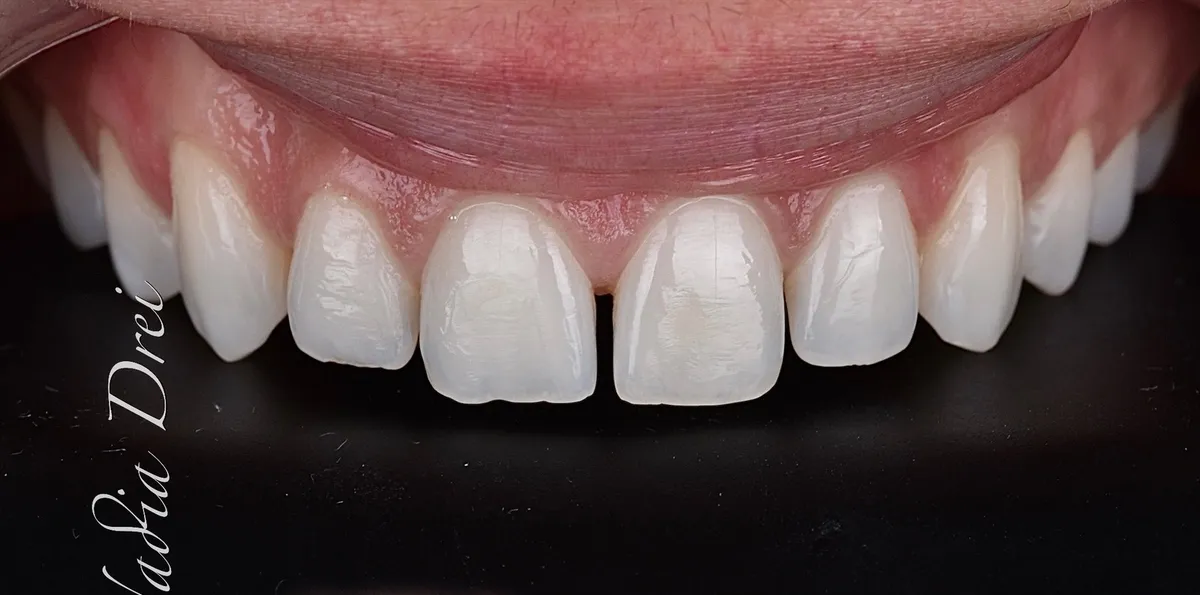
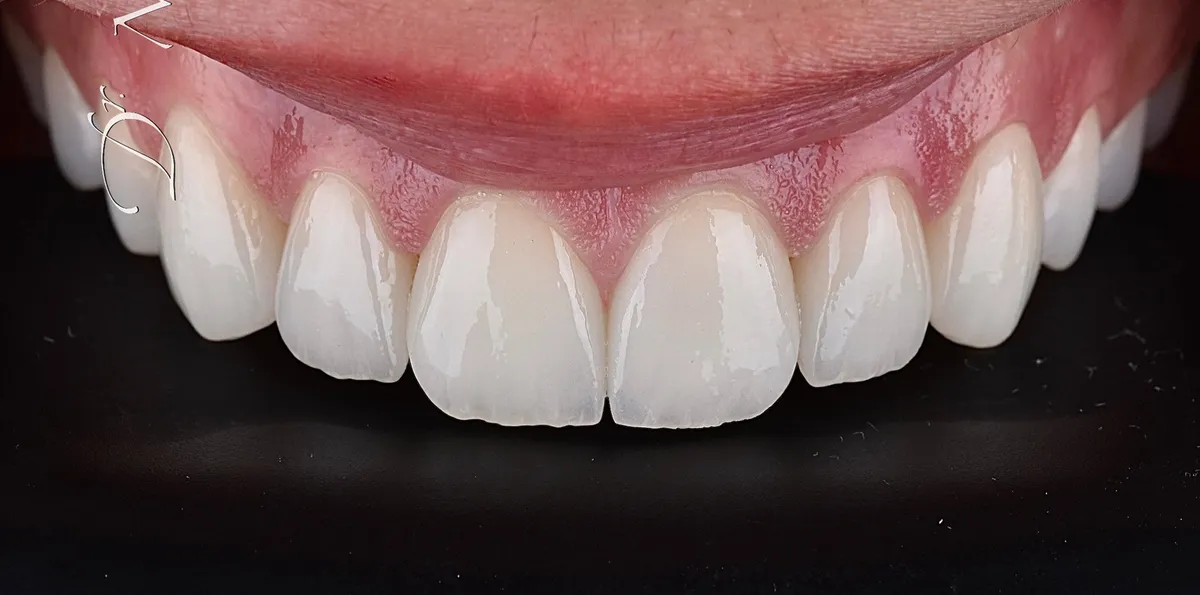
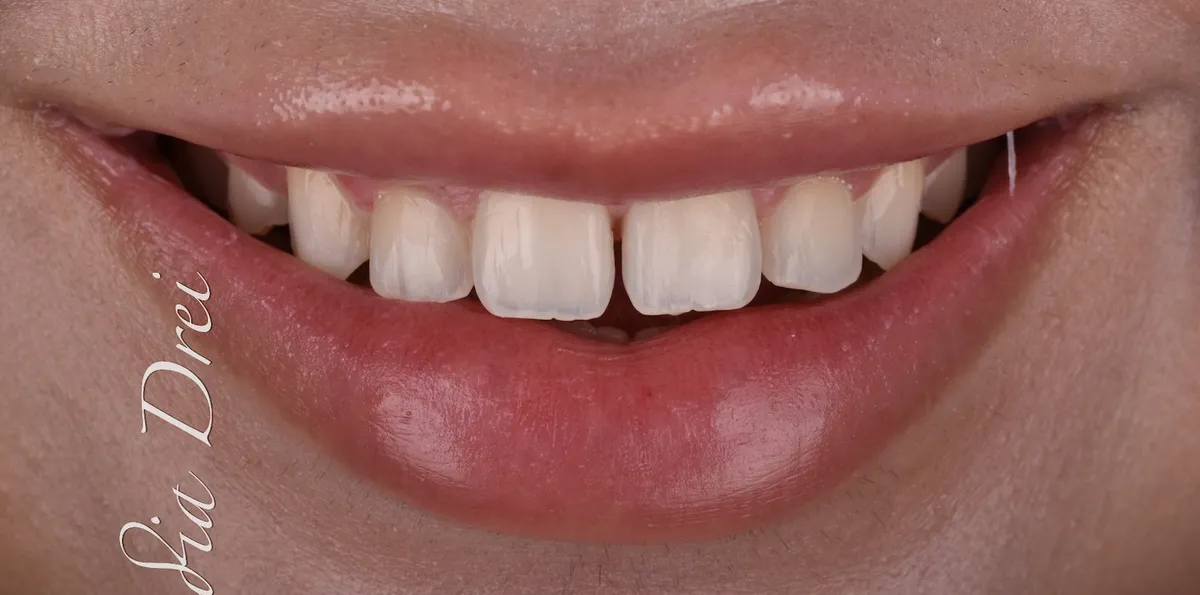
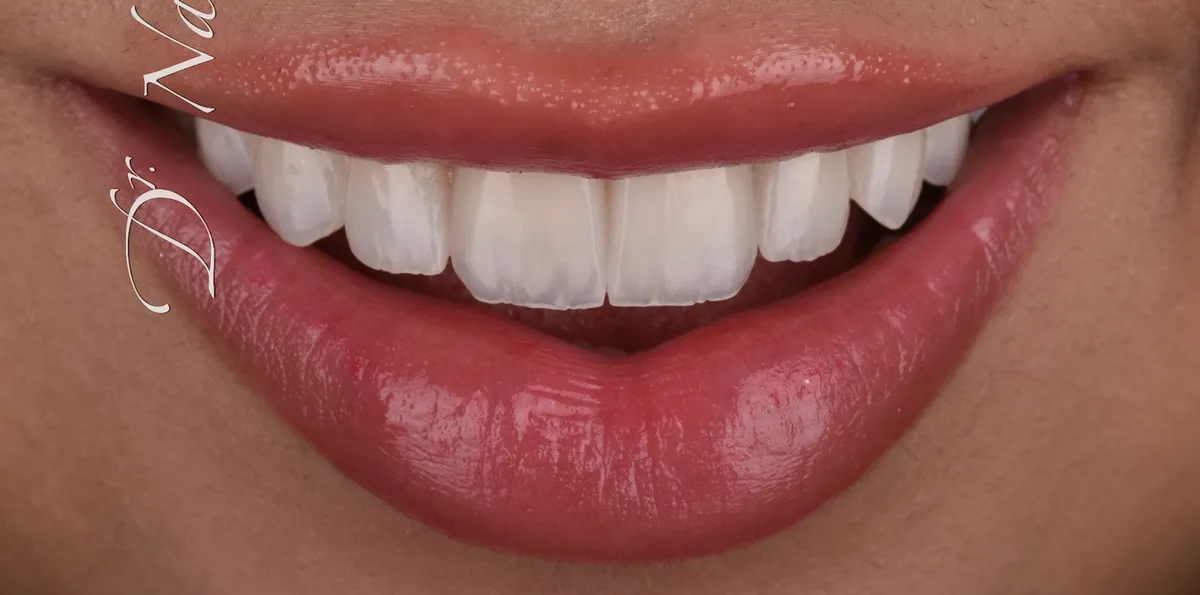
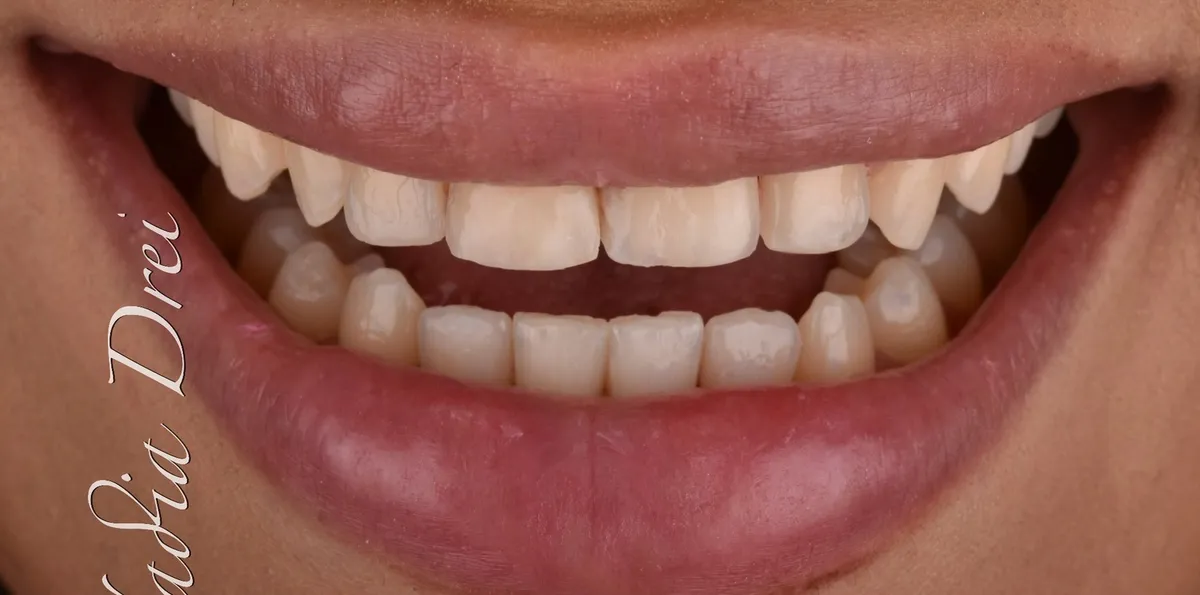
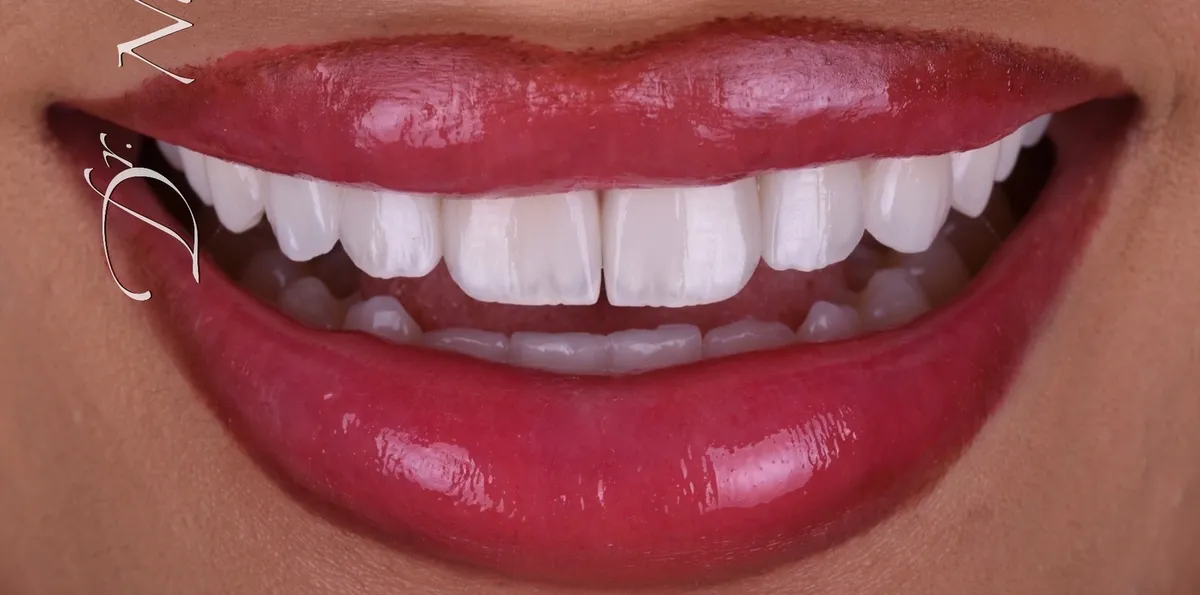
Every photo is Dr. Nadia's own work, taken with her clinical camera. Drag the handle on each image to compare.
Common questions
How long do porcelain veneers last?
With good care, porcelain veneers commonly last 10 to 15 years or longer. Regular check-ups, and a night guard for people who grind, help them last.
Is getting veneers painful?
Preparation is done under local anaesthetic. Some patients notice mild sensitivity for a few days afterwards.
Can veneers be whitened later?
No. Porcelain doesn't change colour with whitening, so if you want whiter natural teeth, whitening is done before the veneer shade is chosen.
How many visits does it take?
Usually three to four visits over two to three weeks, depending on the number of teeth and the lab.
Other treatments
Tell her what you'd like to change.
She replies personally and books the day and city that suit you.
Message Dr. Nadia on WhatsApp